
Chapter 1: Historic Preservation & Heritage Tourism
1.1 Ruffner/Rosedale Cabin Relocation
1.2 Historic Property Restoration
1.3 National Salt-Making Heritage Area
1.4 West Virginia Salt Museum Exhibit Updates
1.5 Malden Museum
1.6 Historic Cemetery Access
1.7 Gateway to the Gorge
1.8 Apply to be a National Park Landmark
1.1 Ruffner/Rosedale Cabin Relocation
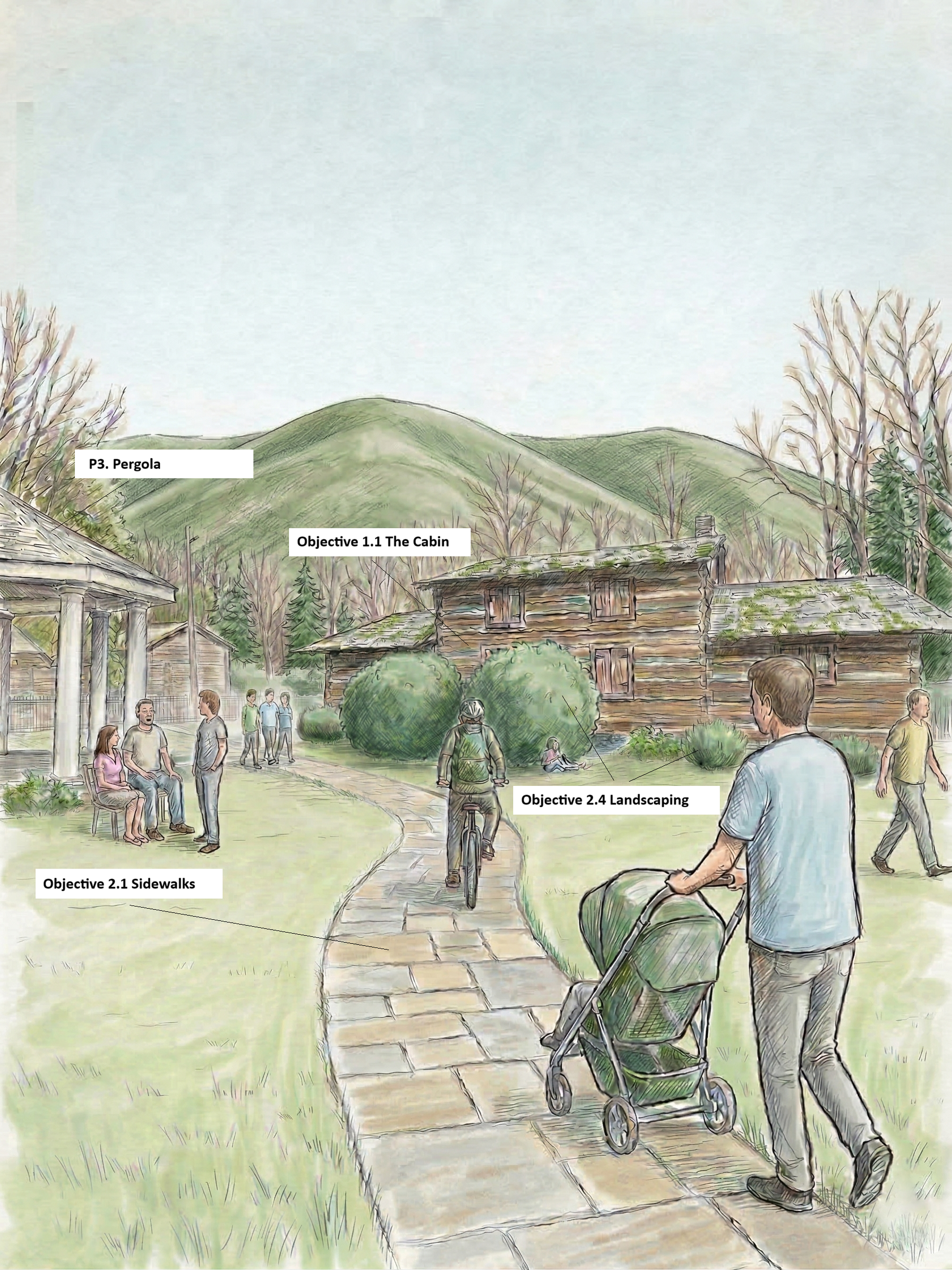
An Artifact Without Equal
The rescue of the Ruffner cabin to Malden’s Village Green keeps one of the oldest known dwellings in Kanawha County on the ground where its family’s remarkable history within the Kanawha Valley began.
The cabin was the home of Joseph Ruffner and his family after they moved to the Kanawha Valley in 1795, near what is today the State Capitol grounds on land that was then the western Virginia frontier. The Ruffner family went on to help create the town of Charleston, Kanawha Valley’s salt industry, predating the American Industrial Revolution in New England, and establishing western Virginia’s first coal mining operations, both industries on the backs of enslaved Virginians. Their son, David Ruffner, subdivided the town of Malden in 1830, naming it Saltborough. The cabin that sheltered this remarkable family, as the founders of both industries, is a rare and precious public artifact of our early history. Unlike any other, it tells our history before the Civil War, like the African Zion Baptist Church, which interprets our history after the Civil War. The cabin was held by the Friends of Craik-Patton House next to Daniel Boone Park. They are expanding their operations and need the space now occupied by the Ruffner Cabin. The Friends of Craik-Patton have donated the cabin to the Friends of Malden Village to move it to Malden, where its story can be told in its proper geographic and historical context. The Cabin’s narrative belongs in Malden, and its relocation there would complete the interpretive work that the Craik-Patton House has long championed. (Rowe, 2026).
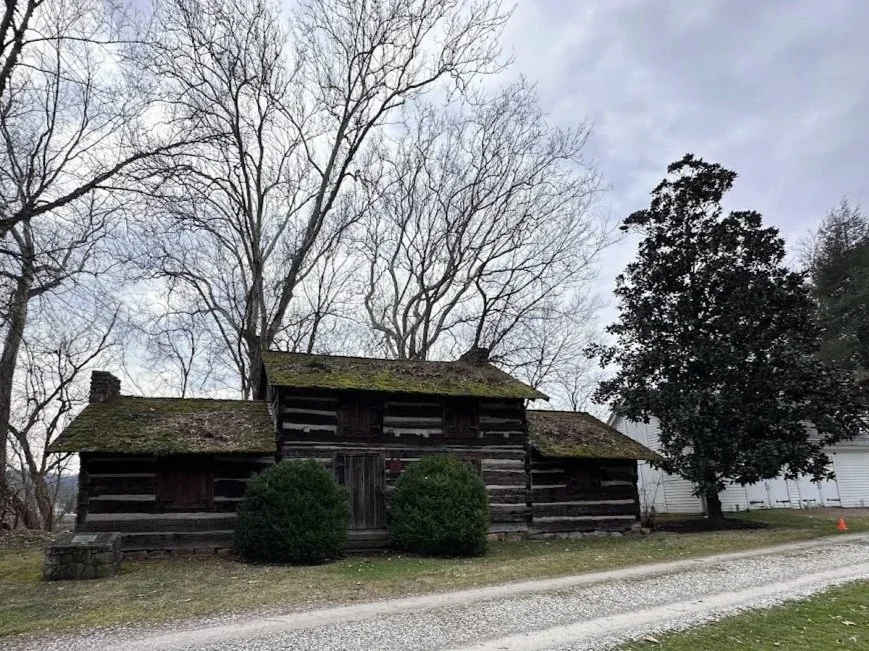
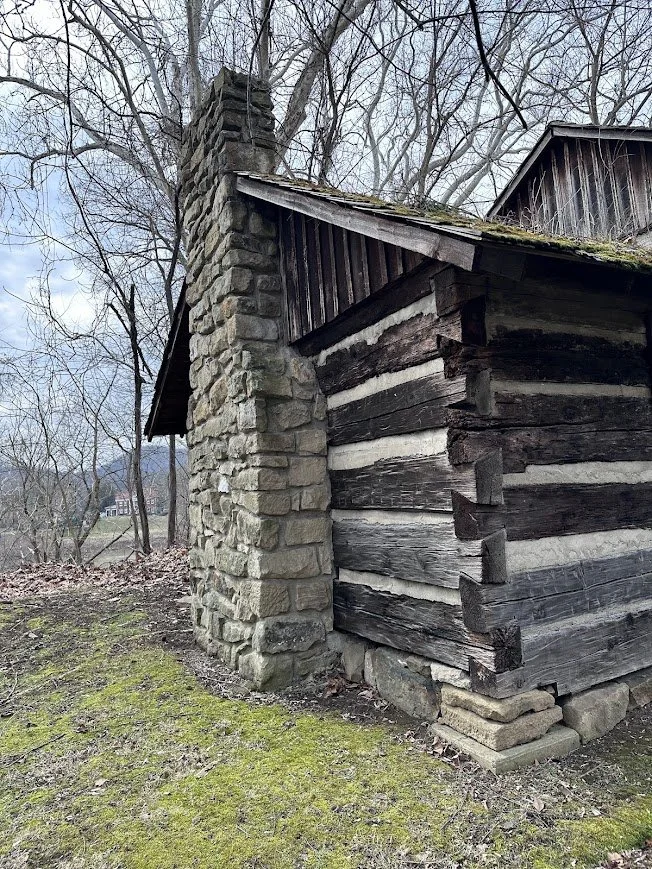
The Ruffner Cabin, March 2026, in its previous location next to the Craik-Patton House.
The Convergence of Stories
The power of the Ruffner Cabin as a heritage asset lies not in the structure alone, but in what it anchors. Positioned on Malden’s Village Green, directly adjacent to the African Zion Baptist Church, the cabin will become the physical centerpiece of one of the most layered historical narratives in West Virginia.
The African Zion Baptist Church was organized in 1852 by enslaved church members, most of whom were by the Ruffner family, nine years before the Civil War, making it the first Black Baptist Church in West Virginia. The proximity of the Cabin to that church on the Village Green creates a single interpretive landscape that tells the full story of the Kanawha Valley’s founding period: the pioneer salt industry, the enslaved Virginians who built it, the independent religious life that enslaved people created within it, and the arrival of Booker T. Washington as a nine-year-old boy in 1865, walking barefoot, 210 miles to freedom in Malden. His seven years in the household of Lewis and Viola Ruffner, and his attendance at the African Zion Baptist Church school, form the foundation of the character and vision he would carry to national prominence as the leader of ten million African Americans at the turn of the twentieth century (Rowe, 2026).
No comparable interpretive cluster exists anywhere in West Virginia. The cabin, the church, the Booker T. Washington Park, the replicas of his boyhood home, and the Village Green together constitute what heritage tourism professionals would recognize as a critical mass: the threshold of visitor experience at which a site becomes a destination rather than just a stop.
A Precedented and Reasonable Move
The physical relocation of historic structures is a well-established preservation practice. The Craik-Patton House was moved twice before arriving in 1973 at its current location near Daniel Boone Park, where it has been nobly maintained as one of Charleston’s premier heritage sites ever since (Friends of Craik-Patton House, n.d.). The precedent of moving a structure to preserve and contextualize it is not unusual; it is a recognized strategy of the National Register of Historic Places framework.
To assess the feasibility and cost of relocating the Ruffner Cabin, the Friends of Malden Village consulted a structural engineer whose father was directly involved in the original 1970s relocation of the Ruffner Cabin. His firsthand familiarity with that project, combined with his own professional experience conducting a comparable historic structure relocation in the 1990s, provides a meaningful benchmark for what such work typically demands in both complexity and cost.
The Malden relocation benefits from a simpler site, a shorter distance, and the extraordinary goodwill of the contractors involved. Priority interest in the project has been given by Mark Bowe, known nationally for his historic barn restoration work and 19 seasons of Barn Builders, which you can view on HBO Max.
This is a modest investment relative to the interpretive and economic development return.
Lemonade Stroll
In June of 2026, the Friends of Malden Village hosted a Lemonade Stroll of Old Historic Malden, which was met with a terrific turnout. Dozens of participants walked the streets of Malden, learning about the history of the town. There were notable attendees from politics, tourism, and the news, as well as regular citizens alike. Lemonade was served to combat the heat of the day.
Rick Steelhammer wrote an article in the June 12th edition of the Charleston Gazette-Mail, which made the front page. WOWK 13 News did a story and video on the event, and WOWK 13 News has expressed interest in a feature story on the move of the cabin once that commences. A representative from Public Radio attended and was very interested in doing a story on Malden as a whole.
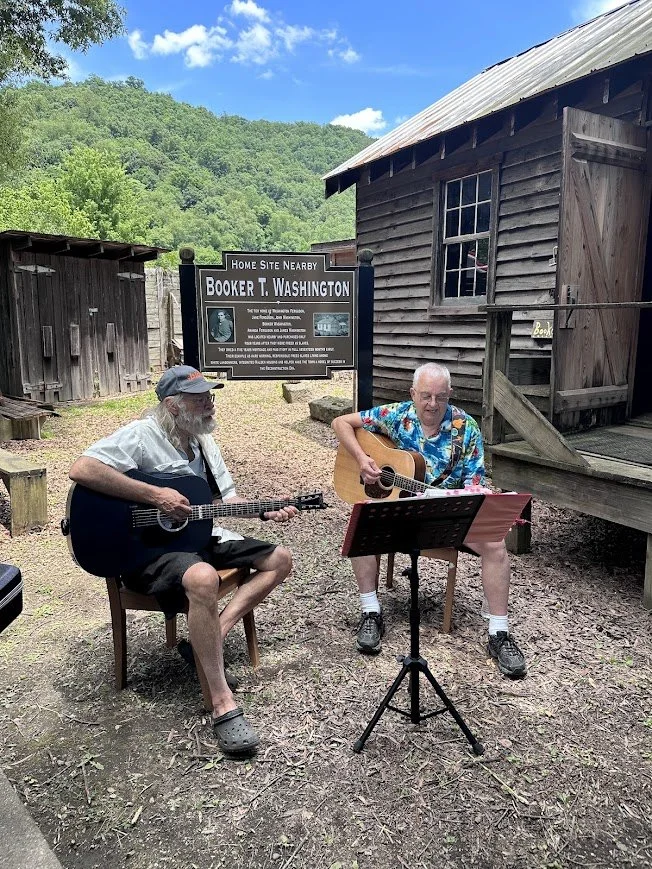
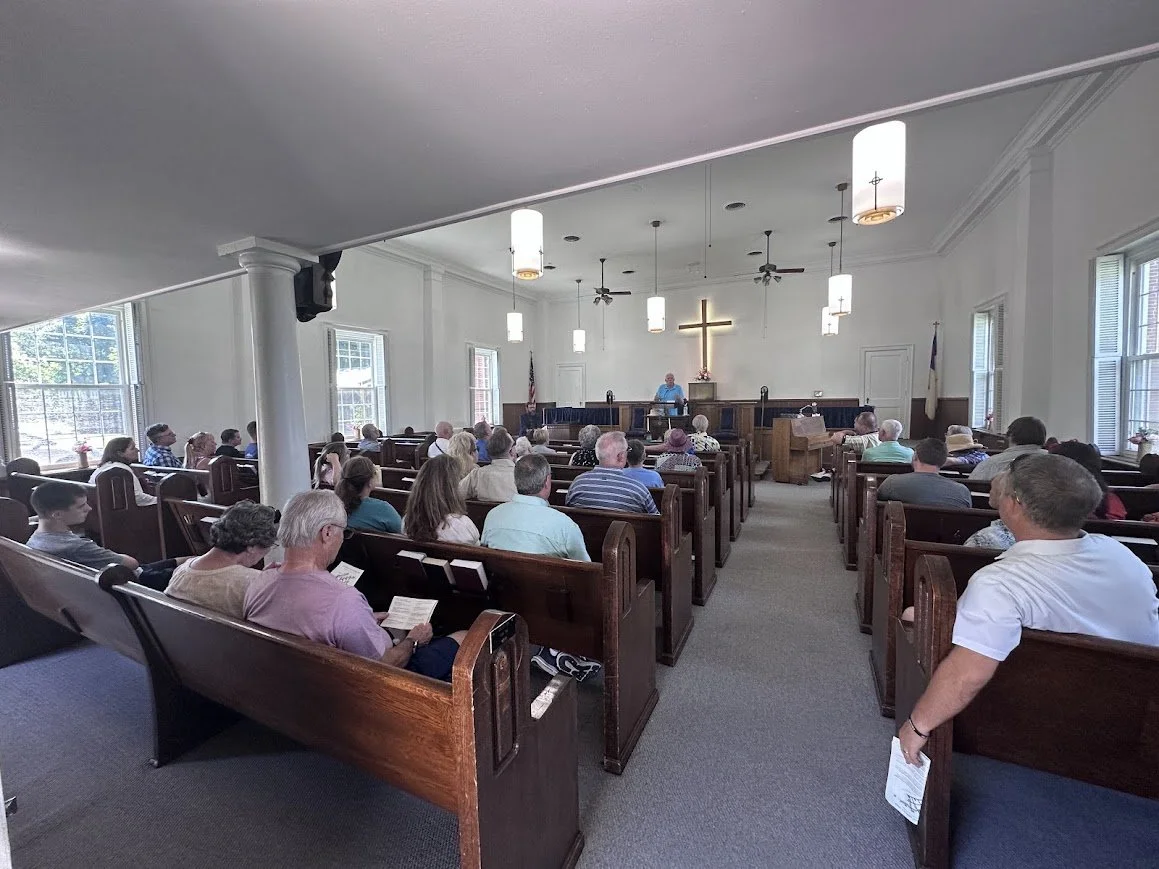
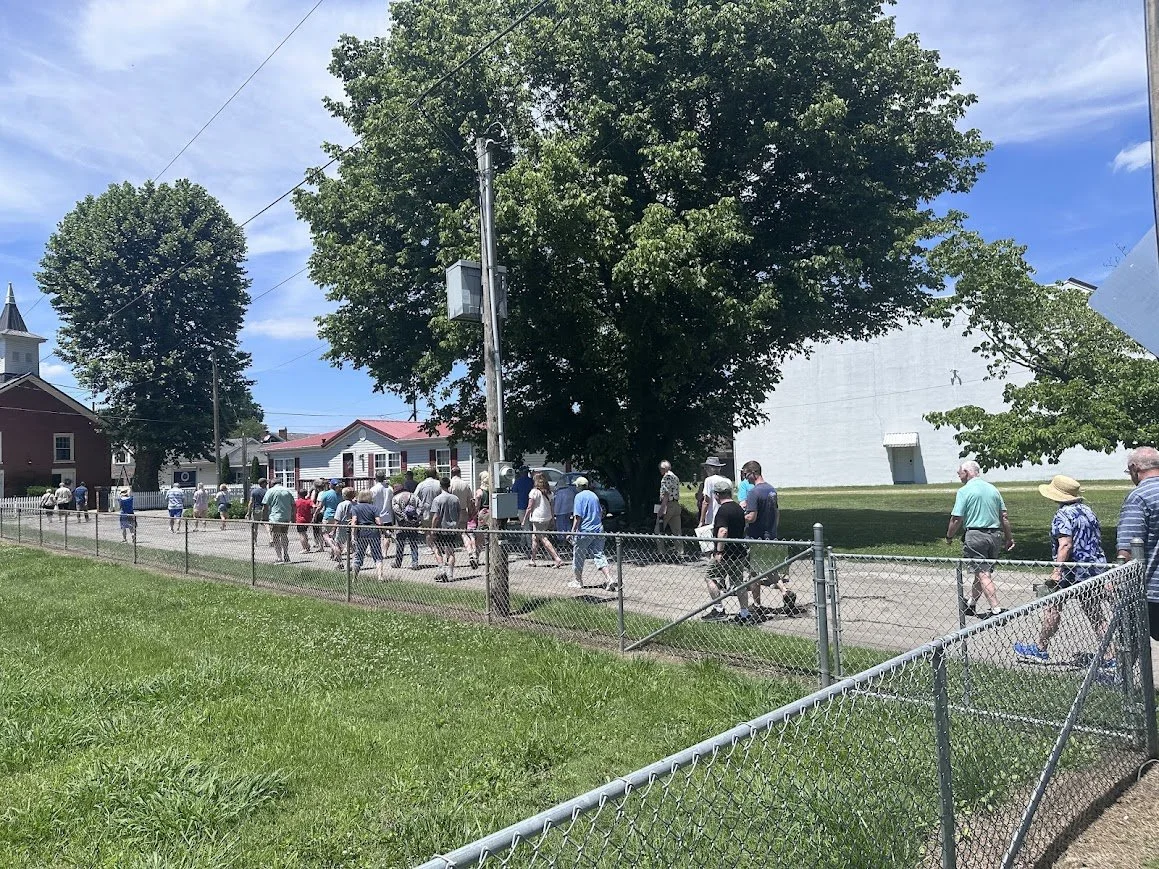
June 2026 Lemonade Tour
Phase 1: Disassembling and Moving the Cabin
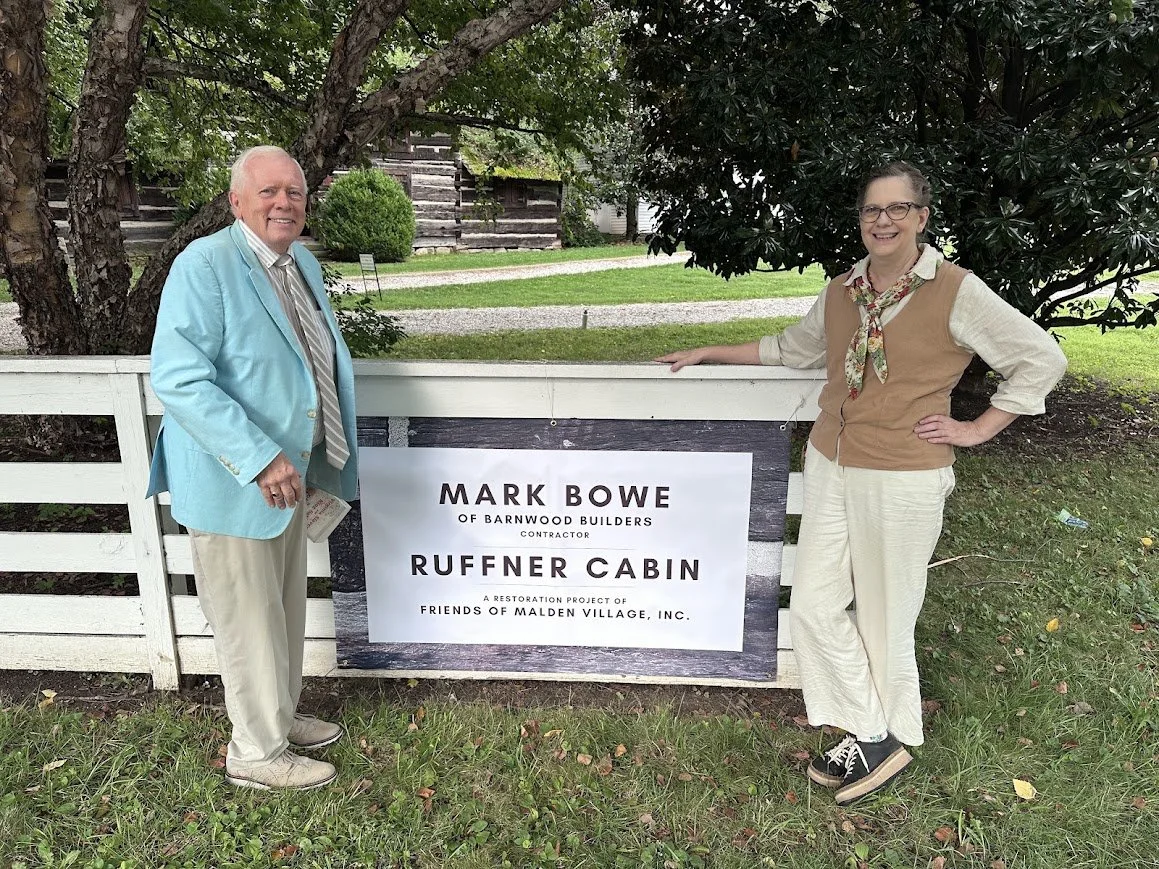
Larry L. Rowe of Friends of Malden Village and Amee Lin Beckner of the Craik-Patton House, the day of the move
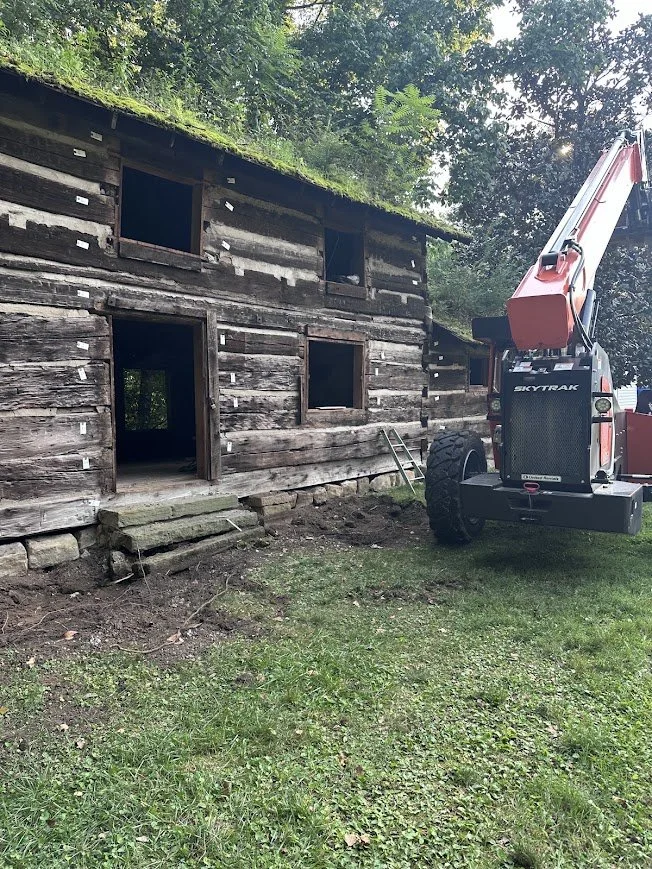
Mark Bowe’s crew tagging the cabin
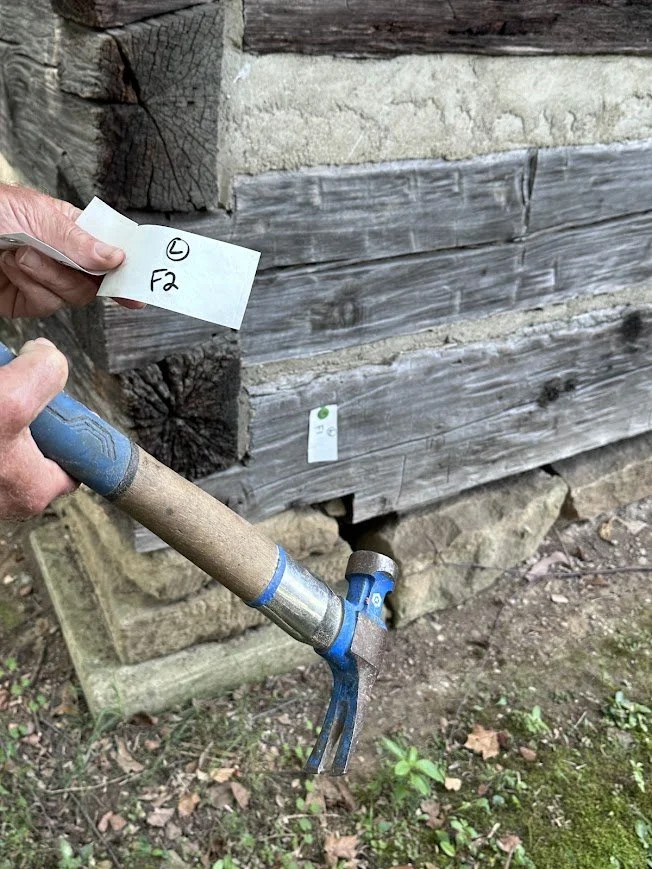
Mark Bowe’s crew tagging the cabin
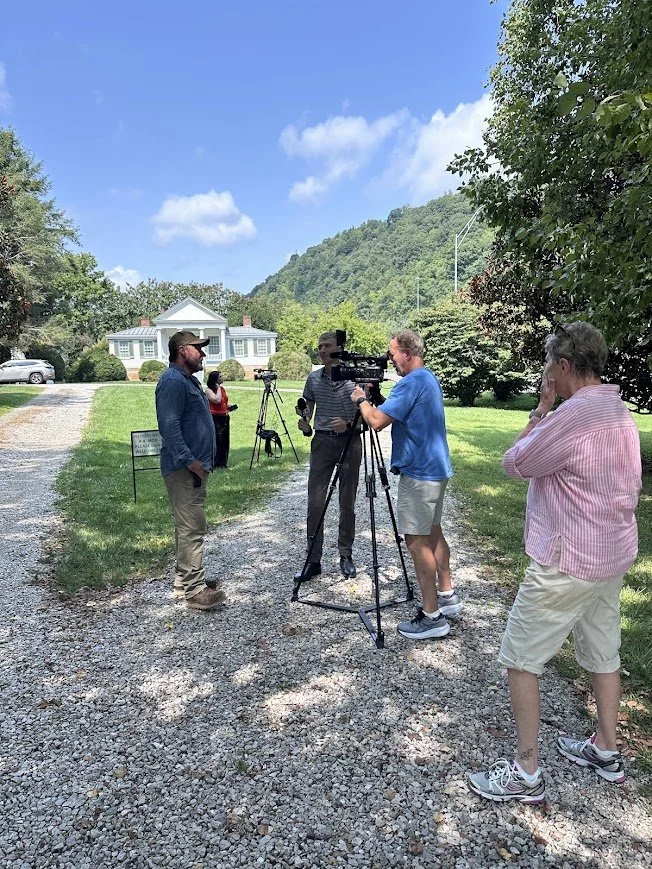
Mark Bowe of Barnwood Builders being interviewed by one of the many news stations that came out to see the move
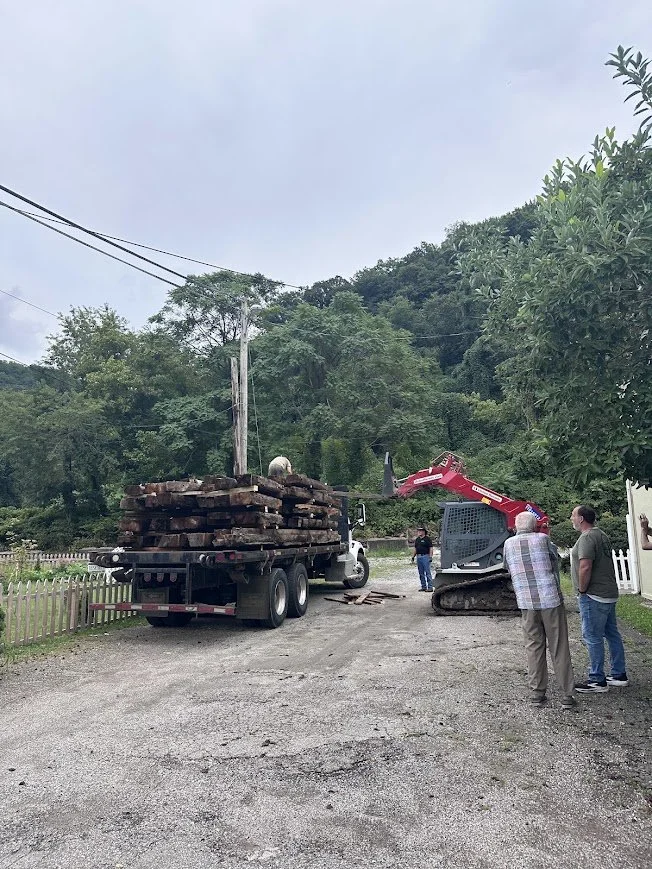
The Ruffner Cabin arriving in Malden!
The Ruffner Cabin arriving in Malden!
Phase 2: Reassembling the Cabin — COMING SOON! EST. FALL 2026
1.2 Historic Property Restoration
Saving the Norton and Hale Houses
Grant funds received by West Virginia State University will support the physical preservation of two contributing structures within the Malden National Historic District: the Hale House at 4208 Malden Drive and the Norton House at 315 Malden Drive.
Work at both properties will likely include roof repair, mold remediation, restoration of wood destroyed by salt from passing trucks, and improvements to electrical, HVAC, and plumbing systems, performed in accordance with the Secretary of the Interior's Standards and Guidelines for Archaeology and Historic Preservation (National Park Service, 2025).
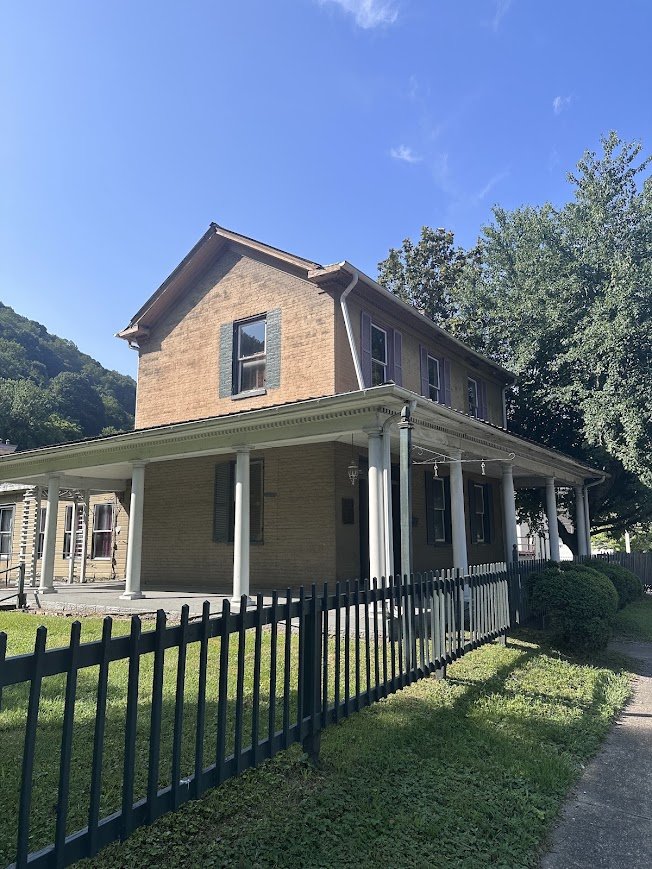
Hale House before renovations begin, 2026
1.3 National Salt-Making Heritage Area
Heritage Assets
National Heritage Areas are places where historic, cultural, and natural resources combine to form cohesive, nationally important landscapes. There are 62 designated National Heritage Areas in 36 states across the country. They support a diversity of conservation, recreational, educational, and preservation activities.
National Heritage Areas (NHA) are established by an act of Congress after a feasibility study and approval by the National Park Service (NPS). After designation, NPS provides technical assistance and funding to support NHA efforts, including historic preservation, conservation, recreation, heritage tourism, education, and fostering local pride and stewardship. The benefits also include economic impacts through tourism and visitation, as well as a catalyst for related economic development.
An example of the benefits of an NHA can be seen in the successful activities of the adjacent National Coal Heritage Area, located in 13 counties of southern West Virginia, including the Paint and Cabin Creek valleys of Kanawha County. It was officially designated as an NHA in 1996 through the Omnibus Parks and Public Lands Management Act. It is managed by the National Coal Heritage Area Authority and promotes preservation and interpretive projects in partnership with local, state, and federal organizations. Its promotional efforts and cultural sites attract thousands of tourists annually. This heritage area generates $207 million in economic impacts, supports 2,744 jobs, and generates $16.8 million in tax revenue.
These types of economic and cultural success could be realized in Malden and the Upper Kanawha Valley with the creation of a Kanawha Salines National Salt-making Heritage Area. The Kanawha Salines were the largest industry in western Virginia, with salt wells, furnaces, boiler plants, and grainers (for refining salt brine) stretching from Charleston east to Quincy on both sides of the Great Kanawha River. Fifty-two saltworks operated in this area, producing at peak capacity in 1850, 3.1 million bushels of salt and employing 3,000 workers. About 1,500 of these workers were African American slaves, either owned by the salt-makers or leased on an annual basis from slave-holding families in Virginia. Their product was shipped on flatboats to market cities on the Ohio and Mississippi rivers, where it was used mainly to preserve meat. Malden was the business center and residential zone for many of the salt-making families. With an investment of over 1 million dollars, the salt-making business was kept competitive by various business combinations to control production and divvy up markets. In fact, John Stealey and other historians claim that the Kanawha salt-makers developed the nation’s first “trusts” decades before such combinations were seen as a menace to free enterprise after the Civil War.
The heyday of the Kanawha Salines was the period between 1797, when the first salt furnace was blown in, and the 1870s, when John P. Hale’s Snowhill furnace failed due to stiff competition from more favorably located saltworks. However, one saltworks continued by making not only salt, but also chemicals derived from the salt brine. The J.Q. Dickinson Works remained in production in the 20th century, using electrolysis to break down salt brine into its constituent elements and selling barium, bromides, and calcium chlorides. The plant pioneered the transition from salt to chemical production in the Kanawha Valley. The Dickinson Works continues to produce artisan table salt today using the sun, rather than coal, as a heat source to evaporate the salt brine.
Cultural Resources in the Kanawha Salines Area
Malden Historic District
Many of the cultural resources associated with the Kanawha Salines and the leading salt makers of Malden are included in the Malden Historic District, which includes 95 contributing buildings, including industrial and ecclesiastical structures.
Pivotal sites within the Malden Historic District include 1) the 1836 Richard E. Putney House, 2) the 1838 Hale House, 3) the 1840 Kanawha Salines Presbyterian Church, 4) the 1877 Company store & office building at the J.Q. Dickinson Saltworks (now a museum), all associated with Malden’s salt makers or civic leaders; and the 1872 African Zionist Baptist Church, associated with Booker T. Washington and Malden’s African American community. The church qualifies as a National Monument or Landmark.
The ca. 1800 Ruffner Cabin, which is closely associated with the leading family of Malden salt-makers, will soon be located within the Malden Historic District. It is being moved from its present location in East Charleston to Malden, partly because it is threatened with destruction at its present site.
J.Q. Dickinson Salt-Works
In 2013, Nancy Bruns and Lewis Payne, seventh-generation descendants of William Dickinson, Sr., reinvented the tradition of salt-making at the Kanawha Salines. They transformed the process from the traditional coal-fired furnace to a pollution-free, environmentally friendly process that produces small-batch, culinary salt. The partners have tapped the same pool of salt brine that salt pioneers did over a century ago. No nasty coal smoke here, as the brine is evaporated in special sun houses by hand. Their products are available for purchase at the on-site visitor center or by special order from the J.Q. Dickinson Salt-Works. The saltworks is located just south of Malden Village along the old James River and Kanawha Turnpike. The visitor center is beautifully landscaped and keeps regular hours. It has a gift shop, where different formulations of their culinary salt are sold, a small exhibit area, and dining for special events. An annual springtime event, Salt Fest, is held here and at the grounds of the old plant. An informative and richly illustrated website is at jqdsalt.com.
Cultural Landscape
The Ruffners laid out their property near the Great Buffalo Lick, a salt spring where early saltworks were established, as a residential area in the 1830s. This community, five miles southeast of Charleston, was first known as Terra Salis or Kanawha Salines. The Ruffners renamed it Saltborough, yet another name for the community that didn’t stick. The Ruffners subdivided it into lots in the 1830s and established a layout similar to a New England-style village. The community assumed the name Malden in the 1850s. As the community grew in population, this original layout was followed. Today, one can trace this original layout, and it contributes to the historic, cultural landscape of the place.
A pleasing cultural landscape lies just south of the residential area of Malden at the J.Q. Dickinson Saltworks. A multi-acre cow pasture with a 19th-century barn, silos, and outbuildings is a reminder of earlier times. It illustrates the diversified operations of many salt-making families in the 19th century, when agriculture and other ventures supplemented salt-making.
Additional Cultural Resources in Upper Kanawha Valley
Additional cultural resources of the Kanawha Salines exist outside of Malden Historic District. The 1810 Samuel Shrewsbury House, or Old Stone House in Belle, has been placed on the National Register of Historic Places. It is notable as an example of pioneer architectural construction in stone, rather than logs, and its association with salt makers Samuel, John, and Joel Shrewsbury. Joel formed a partnership with William Dickinson, Sr. in 1809 to found the Dickinson & Shrewsbury partnership that became the leading salt-producing company by the 1830s. Joel Shrewsbury was also the post master of the Malden post office for many years.
Archaeological Resources at Kanawha Salines
In 2022 and 2024, West Virginia State University partnered with the Kanawha Salines Foundation to hold archaeology field schools on the grounds of the Hale House. Students from WVSU unearthed hundreds of artifacts, including projectile points, a drill made of Kanawha Black Flint, and numerous flint sherds dating to the Archaic Period (8000 – 1000 BC), as well as hundreds of nails and glass sherds demonstrating that a summer kitchen or slave quarters stood next to the Hale House in the 19th century. These finds extend the period of our interpretation to the Native American occupation and early domestic life with slavery.
A second archaeological site was excavated in the Kanawha Salines area in 2000-2001 in connection with the rebuilding of the Marmet lock and dam on the Great Kanawha River by the U.S. Army Corps of Engineers. Archaeologists located the Willow Bluff site about 3.5 miles southeast of Malden on a former salt works site owned by the Reynolds family. It is located on the Burning Springs Branch drainage near the 250-acre plat set aside by George Washington for public use in 1790, which later fell into private hands. Artifacts and features relating to salt production, as well as a slave cabin, were found here. Artifacts from the slave cabin shed much light on the daily lives of slaves, who numbered around 1,500 at the height of production at the Kanawha Salines.
Additional cultural resources associated with the Kanawha Salines can be revealed by a cultural resource study of Upper Kanawha Valley communities. Such a thorough study has never been undertaken. Archaeological testing, including a LiDAR survey and pedestrian survey, should help us identify salt-making sites or Native American sites for excavation or interpretation.
1.4 West Virginia Salt Museum Exhibit Updates
The Kanawha Valley Salt Museum is situated at the former J.Q. Dickinson Saltworks on the east side of Malden Village. It is included in the Malden Historic District, along with the three nearby historic outbuildings. It was formerly a company store and office at the J.Q. Dickinson Works, which was founded in 1877 on the ruins of the 1832 Dickinson & Shrewsbury saltworks.
The wood-frame building is divided into three sections: an 1877 central structure, with a ca. 1910 addition on the south elevation, and a ca. 1910 two-story office addition. While the office addition contains papers, books, and personal items, and retains the appearance of an office, the other two sections have been converted to storage and display areas, with temporary exhibits and salt-drilling tools that have been collected in the past twenty years or so. The attic of the office contains personal and business correspondence of the J.Q Dickinson Saltworks.
Several preservation measures have been undertaken on the building in recent years based on a Historic Structure Report prepared for the Kanawha Salines Foundation and Lewis Payne by Michael Gioulis, Preservation Consultant, in 2018 (Gioulis, 2018). The Gioulis report contains additional information on preservation measures and plans, and elevation drawings of the building. Measures accomplished by Lewis Payne include foundation work, a new roof, installation of a heating/cooling system, lighting, and an ADA-compliant handicap ramp. The building still requires additional work, including a finished floor in the 1910 south addition, additional lighting, repointing of the chimneys, and a sign along the intersection of the access road with the Midland Trail.
Some of the collections have been inventoried, but not labeled, including some of the drilling tools, but the basic work of cataloging artifacts remains. The company papers in the attic have been inventoried as well, but not catalogued. The museum does, however, elicit considerable interest among visitors due to the layout of interesting items by Lewis Payne.
The goals of the Kanawha Salines Foundation are to complete the rehabilitation of the building, improve and create exhibits, and staff the museum for visitation for at least 120 days annually. Basic aid in assessment of the current collections can be accessed by using the Collection Assessment Preservation (CAP) program (American Institute for Conservation, n.d.). Funding for improvements may be obtained from the Kanawha Salines Foundation, as well as grants from the West Virginia Humanities Foundation, Preservation Alliance of West Virginia, West Virginia Dept of Tourism (Culture and History), and the West Virginia Association of Museums.
A 2024 assessment and recommendation by public history student Miranda Hummer provides a partial action plan to improve the visitor experience at the museum. It is summarized below:
The exhibit improvements prioritize two evidence-based museum practices: object identification and hands-on interaction. Tombstone identification cards placed beside items give artifacts the context that visitors need to connect with what they are seeing. Scrapbook-style displays for papers and pamphlets preserve fragile items from handling damage while keeping them visible and legible. Floor-level podiums for tool displays allow 360-degree viewing and improve accessibility for visitors of all ages and mobility levels. A restored glass display case along the left wall would provide a dedicated space for the collection of historic salt cans and brands, each accompanied by descriptive cards.
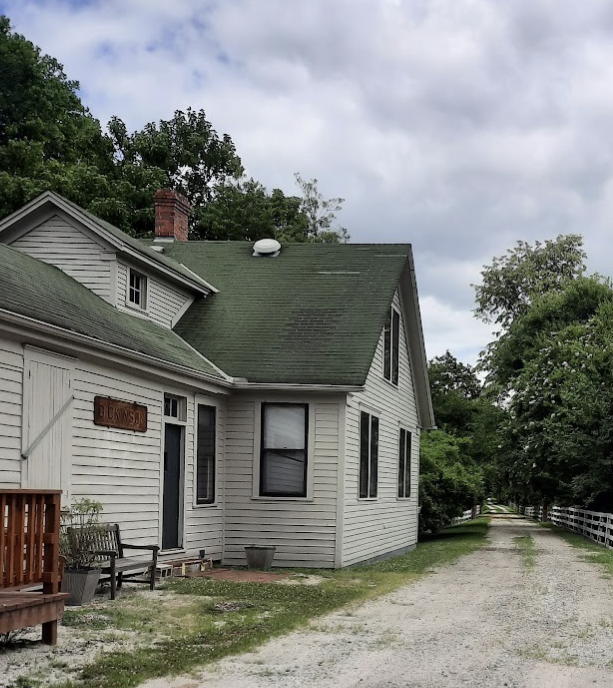
The Salt Museum in Malden
Digital integration is a practical priority. A tablet kiosk, a low-cost and widely used approach in small museums, would consolidate audio, video, and educational resources about the saltworks industry and local history into a single interactive station. Three-dimensional printed models of tools attached to floor displays would allow visitors to handle representations of artifacts without risking damage to originals.
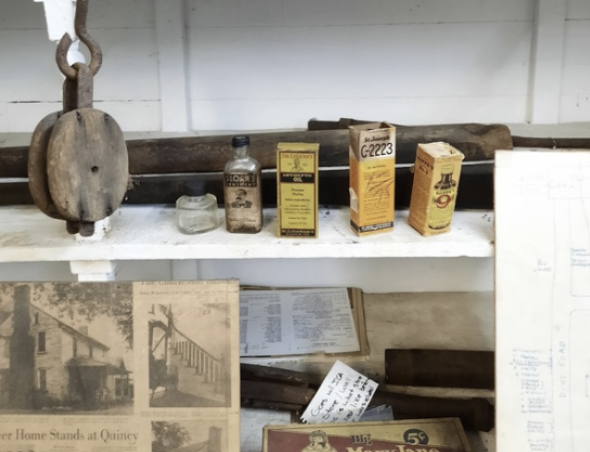
The left wing is filled with all of the tools
and material evidence of the workers.
The bank vault in the right wing represents an underutilized asset with particular potential for social media-driven visitor traffic. With minimal investment, including interior organization, an informational panel, improved lighting, and a few well-chosen display objects, the vault could become a signature photo moment for visitors. A dedicated hashtag and simple in-vault signage encouraging photos would extend the museum's reach organically through visitor-generated content, driving awareness and foot traffic at no ongoing cost.
A grant for the flooring, exhibits, and additional signage was awarded to the Kanawha Salines Foundation by WV Culture and History in July of 2026.
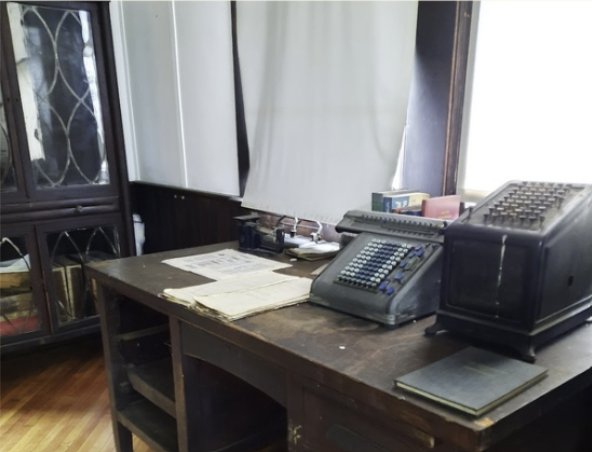
The right wing feels like a trip back in time to a genuine company store.
Malden is a collection of stories: stories of salt and struggle, of genius born here and shaped here, of hands that quilted and drilled and built and worshipped and endured. The Malden Museum is where those stories will live together under one roof, told in a way that honors the people who made them. These are some of these stories:
The Industry That Built the West
The Kanawha Salines was the largest salt-producing region in western Virginia. Salt from its wells preserved the meat that fed a nation pushing westward, making possible the pioneer development of Midwest farming and powering the rise of Cincinnati as the Queen City of the West. The Ruffners drilled America’s first deep well here in 1808. By 1830, the valley had produced the country’s first business trust. Families like Dickinson, Hale, Ruffner, Putney, and Shrewsbury built an empire here, and the Malden Museum will tell their full story: the innovation, the industry, and the enslaved men and women whose labor made it run.
John P. Hale and the First Brick-Paved Road in America
Dr. John P. Hale was one of Malden’s most consequential citizens, a salt-maker, civic leader, inventor, and great-grandson of Mary Ingles. He is credited with helping fund the first brick-paved road in the country, a testament to the ambition and civic spirit that defined Malden’s founding generation. He resided for some time in an 1838 home in Malden, now being restored with federal preservation funding, which stands on Malden Drive as a monument to that legacy. The Malden Museum will interpret Hale and others like him as the pioneers they were, men and women who shaped not just a town, but a nation.
A Son of Malden Who Changed American Art
Robert Henri, born Robert Henry Cozad, whose mother, Theresa Gatewood Cozad, a native of Malden, went on to become one of the most important figures in American art history. He founded the Ashcan School of American realism, organized the landmark 1908 exhibition “The Eight” at the Macbeth Gallery in New York, and by 1929 had been named one of the top three living American artists by the Arts Council of New York. His mother’s obituary ran in the New York Times. Malden gave him his roots, and the Malden Museum will claim that connection proudly.
A National Treasure Was Born Here
From 1991 to 2007, Malden was home to Cabin Creek Quilts, the beloved cooperative that employed more than 100 West Virginia quilters working from their homes and generated over $7 million in sales. Their work earned a nationwide and worldwide following. Quilts were made for three U.S. Presidents, for Barbra Streisand, and for Jackie Onassis. The cooperative was headquartered in the Hale House on Malden Drive, and its presence made Malden a destination for those who sought authentic Appalachian artistry. The Malden Museum will honor the legacy of Cabin Creek Quilts and the remarkable women whose hands carried it.
Friends of Malden Village is currently scouting locations for the Malden Museum. The museum envisions an intimate, high-quality interpretive space that weaves together the full patchwork of Malden’s history, the salt and industry, art and craft, civil rights, and community, into a single compelling story of what this small town gave to America. We have no shortage of material. We need only the space and interpretive signage to tell it right.
1.5 Malden Museum
1.6 Historic Cemetery Access
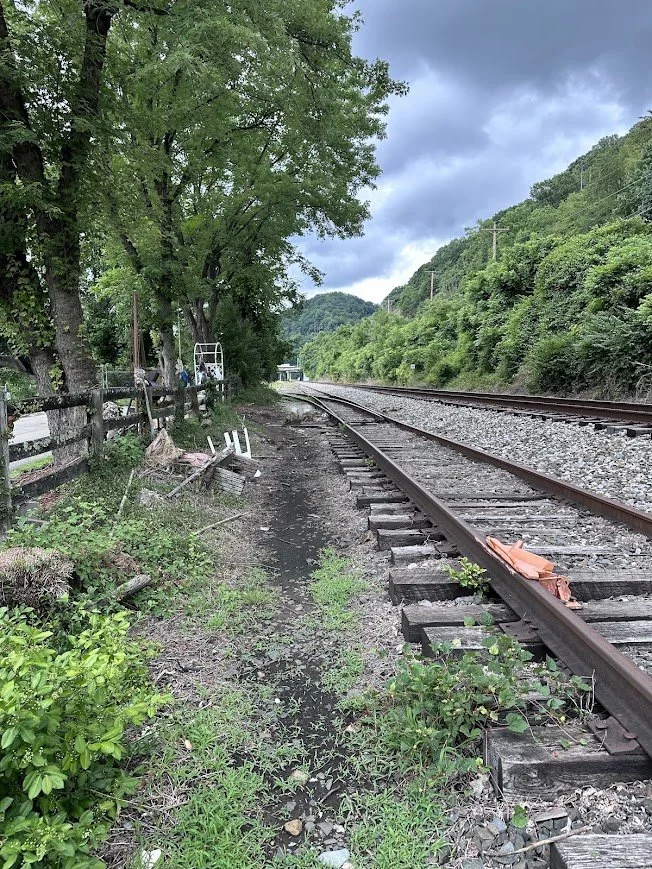
The current entrance to the Ruffner Cemetery
Aletha Putney, whose family had longstanding ties to the Ruffners and who resided in the Putney House in Malden, said it best in her poem about her final resting place, written in 19th-century Malden:
Friendly Dust
Beneath the western shadow of a church
So still forever I shall rest and dream.
I shall not see the waving of the birch
Nor smell the locust blooms beside the stream;
But I shall hear, through hidden lines that spread
From grave to grave beneath the rich dark earth,
The kind words that my grandsire would have said,
The gentle welcome, and the ancient mirth
of ancestors whose ways were not my ways,
But whose stout hearts sent on a chart to guide me.
All through the endless lengthening of days
My heart will hear the words of those beside me.
Our dust will mingle, hid from mortal view;
My forebears, and the child they never knew.
As the founding family of Malden and the Kanawha Valley salt industry, the Ruffners are central to every interpretive thread this development plan advances. Their cemetery is primary historical evidence of that legacy and a natural complement to the heritage trail described in this plan. Visitors who come to Malden to engage with that story deserve the ability to visit this site safely.
Opening Access to Malden's Founding Family
The Ruffner family cemetery sits behind a fence with no accessible entry point for the public. The only current route to the site crosses active railroad tracks on private property, making visits impractical and unsafe for visitors of any age. Friends of Malden Village is working to establish a formal access arrangement with Port Amherst to provide a safe, accessible route to the cemetery for residents, students, researchers, and heritage tourists.
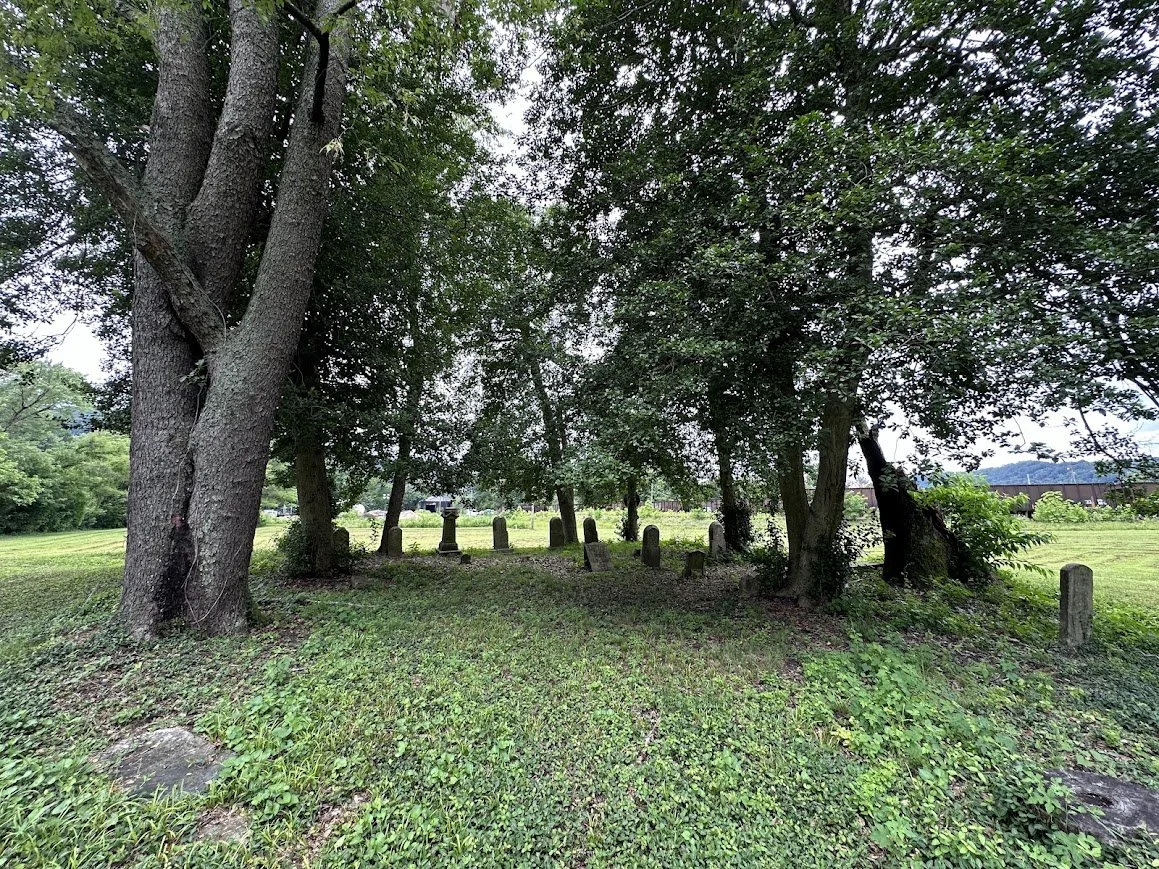
The Ruffner Cemetery
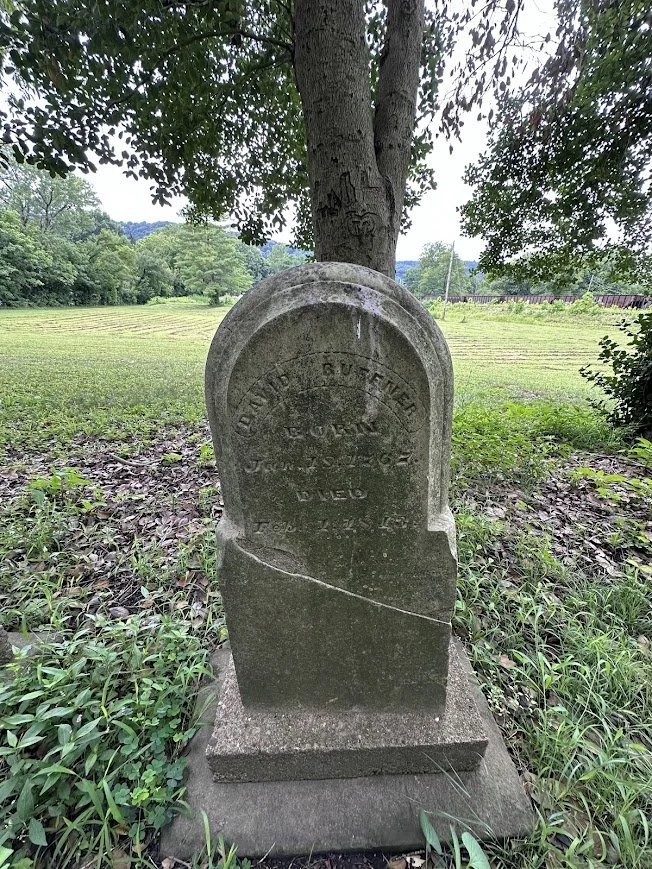
David Ruffner, son of Joseph Ruffner, Sr., who built Holly Grove on the capitol grounds, lies in the Ruffner Cemetery in Malden.
1.7 Gateway to the Gorge
Malden does not stand alone. She sits at the threshold of one of the most spectacular natural and cultural corridors in the eastern United States: the Upper Kanawha Valley, gateway to the New River Gorge. Together with our neighboring towns and with the support of the Charleston Area Alliance, we are building something bigger than any one of the individual neighborhoods or historic sites: a regional tourism mecca that invites visitors to experience the full depth of Appalachian history, from the salt furnaces of Malden to the gorge and back again.
In partnership with the Charleston Area Alliance and towns across the Upper Kanawha Valley, we are delivering to each participating community a sign printed by Charleston Blueprint bearing the name of their town and a shared slogan: “Gateway to the Gorge.” These signs are a declaration of shared purpose. They say to every traveler on Route 60: you are entering something special, and each town along the way has a story worth stopping for.
The vision for Gateway to the Gorge is simple: what’s good for our neighbors is good for Malden, and what’s good for Malden is good for the whole valley. Rather than compete for visitors, we support one another. Joint events, collaborative programming, and themed tours will give tourists a reason to stay longer, explore more deeply, and return, strengthening the economic development in the area. We are planning shared scavenger hunts for families and adults that send participants through multiple towns and into the history of each. We are developing themed tours that connect the salt heritage of the Kanawha Salines with the coal and railroad history of communities further up the valley. Each town in our coalition brings something distinct.
The New River Gorge National Park draws visitors from around the world, and Malden and the Upper Kanawha Valley are their front door. We intend to show that door is worth walking through, with history, culture, craft, and community strong enough to inspire a return visit. The Gateway to the Gorge initiative is ongoing and growing. We are grateful for the partners who share this vision and proud to be building it together.
1.8 Apply to be a National Park Landmark
A National Monument or Landmark Designation for Malden
A National Historic Landmark (NHL) is a property or site that holds a special level of national significance because of its cultural, historic, archaeological, or architectural associations. It represents a higher level of recognition than the National Register of Historic Places, which lists sites of local and state significance. An NHL is established by a designation by the U.S. Secretary of the Interior (who also manages the National Park Service) after a rigorous study by the NPS.
There are 2,600 NHs in the nation and 16 in West Virginia. This includes two town districts at Elkins and Spencer, as well as the Carter G. Woodson School in St. Albans, Kanawha County. Anyone can prepare a nomination for a potential NHL, but it must be approved by the WV State Historic Preservation Office and NPS, which makes the final determination.
A National Monument can be an historic or natural site that holds special national significance. They are typically established by Presidential proclamation according to the 1906 Antiquities Act, though Congress can authorize them as well. There are only 138 National Monuments in the nation, located in 33 states. West Virginia has no National Monuments. Virginia has four National Monuments, including the Booker T. Washington National Monument near Hardy, Virginia, in rural Franklin County. It includes 239 acres of a former tobacco farm, replicas of the cabin where Washington was born, and outbuildings.
Malden boasts a Historic District and the 1872 African Zionist Baptist Church as potential National Monument or National Landmark sites. The Malden Historic District includes 95 contributing buildings, including industrial and ecclesiastical structures. Pivotal structures include the 1838 Hale House, associated with salt-maker, inventor, and civic leader, John P. Hale; the 1840 Kanawha Salines Presbyterian Church, founded by the Ruffner family; the 1877 company store and office, as well as the ruins of the boiler plant and shop buildings of the J.Q.Dickinson Saltworks; and the 1836 Richard E. Putney House. As James Harding wrote in the National Register nomination: “Today, the combination of this rich natural setting and the rich 19th century architectural legacy comprises a district which well deserves to be recognized as a national artifact of the early industrial age of America.”
The African Zionist Baptist Church (AZBC) in Malden was listed on the National Register in 1974 separately from the Malden Historic District, but is adjacent to the historic district and sometimes considered part of it. It was built in 1872 by a congregation formed in 1863 by Reverend “Father” Lewis Rice as the first African American Baptist church in West Virginia. It is a one-story frame structure built atop a stone foundation. It has a gable roof topped by a wooden bell tower. James Harding wrote in the National Register nomination that “all in all, the plain and simple lives of the African Zionist Baptist Church have remained intact since 1872, giving the structure the characteristics associated with age and time.”
Adding to its national significance, the AZBC is intimately associated with Booker Taliaferro Washington (1856-1914), the nation’s leading African American leader during the period from 1881 to 1915. Washington spent his formative years in Malden, arriving after migrating from his boyhood home, where he was enslaved in 1865. From the age of 9 through 25, he lived in Malden, working at the saltworks and coal mines and developing the fine mind and high character that shaped his good work in later years. Washington attended a school in Malden started by “Father” Rice with William H. Davis as his main teacher. He served as a member of the AZBC congregation and was on the governing board of the church. Washington was also the church clerk and taught Sunday school. In 1881, Mr. Washington left Malden to become the Founding Teacher and Principal at Tuskegee Institute in Alabama. He later visited his sister, Amanda Johnson, at Malden often, and played a leading role in the development of the state’s African-American college, now West Virginia State University. He emerged as the nation’s leading African American leader, and the period from 1881 is often called the “Age of Booker T. Washington” in black history. His push for education and vocational training for African Americans was shared by many whites as well, including President Theodore Roosevelt, who hosted a dinner for him in 1901 at the White House.
A National Landmark or Monument Nomination for the African Zionist Baptist Church
A stand-alone nomination of the AZBC as a Landmark or Monument would probably be approved because of its close association with Booker T. Washington and its integrity in representing the late-19th-century period in Malden. Compared to the already-recognized Booker T. Washington homeplace in Franklin County, Virginia, the church has greater significance and integrity. While Booker lived in Virginia for only 9 years, he was at Malden for 16 of his most formative years. Also, while the structures in Virginia are merely replicas of the original ones, the Malden church is an original, authentic artifact with an interesting history and a high level of integrity.
A National Landmark or Monument Nomination for the Malden Historic District, including the African Zionist Baptist Church
An alternative to the stand-alone strategy would be a nomination of the entire district, including the AZBC. This would allow for the inclusion of the Amanda Johnson property, once owned by Booker T. Washington and now a potential archaeological site. It would also allow for a second major theme to gauge national significance: association with a nationally-significant salt industry. The Kanawha Salines was nationally significant as a seedbed of well-drilling technology (for salt brine, oil, and natural gas), as the origin of the first American business combinations or trusts, and as a strategic point of contention during the Civil War. The 1980 National Register Nomination failed to include connections of Malden to the salt industry in an integral manner, instead focusing on the architectural history of the village as the main area of significance. Further research will be required to illuminate the link between Malden’s residents and the salt industry.